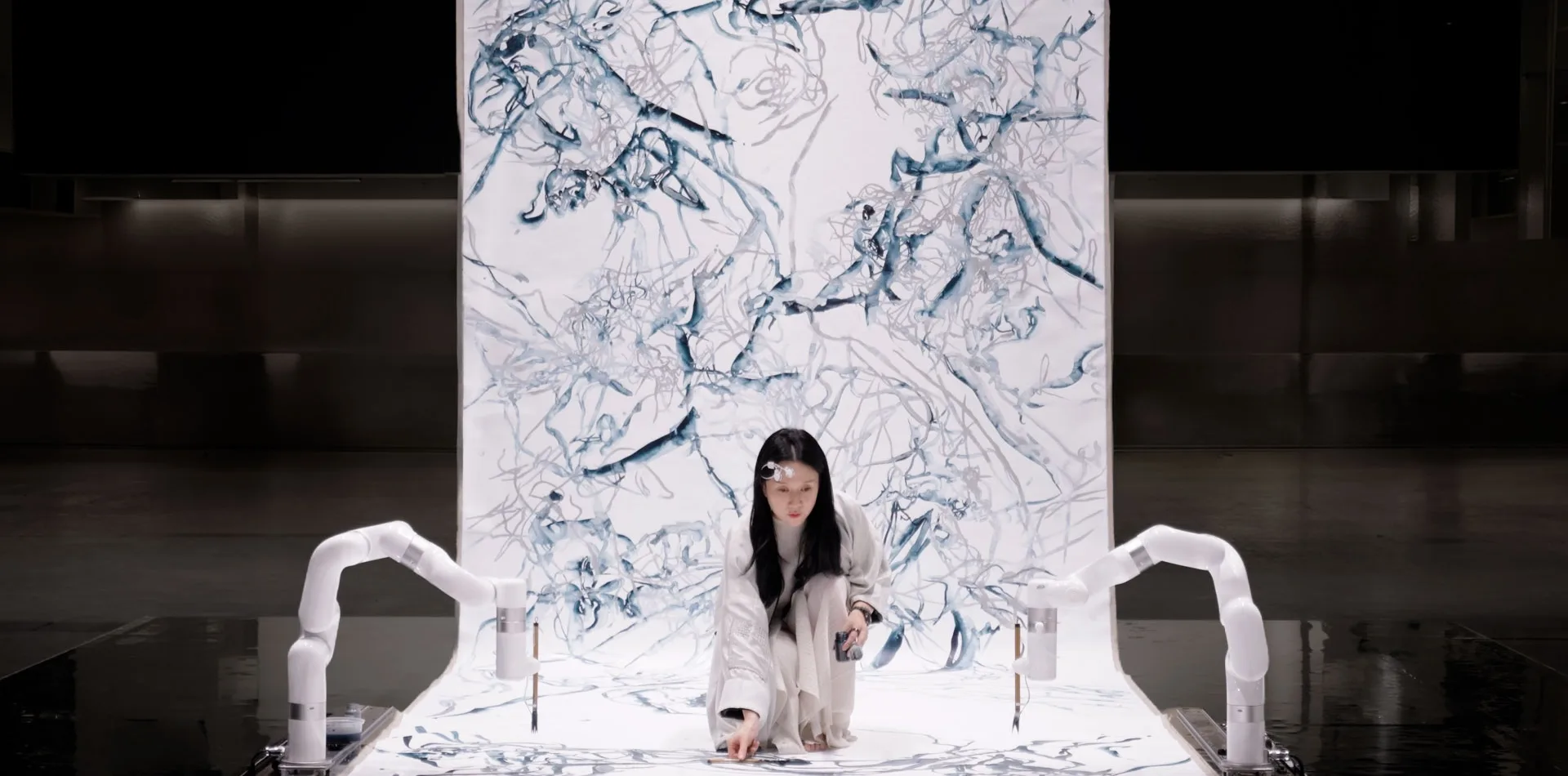
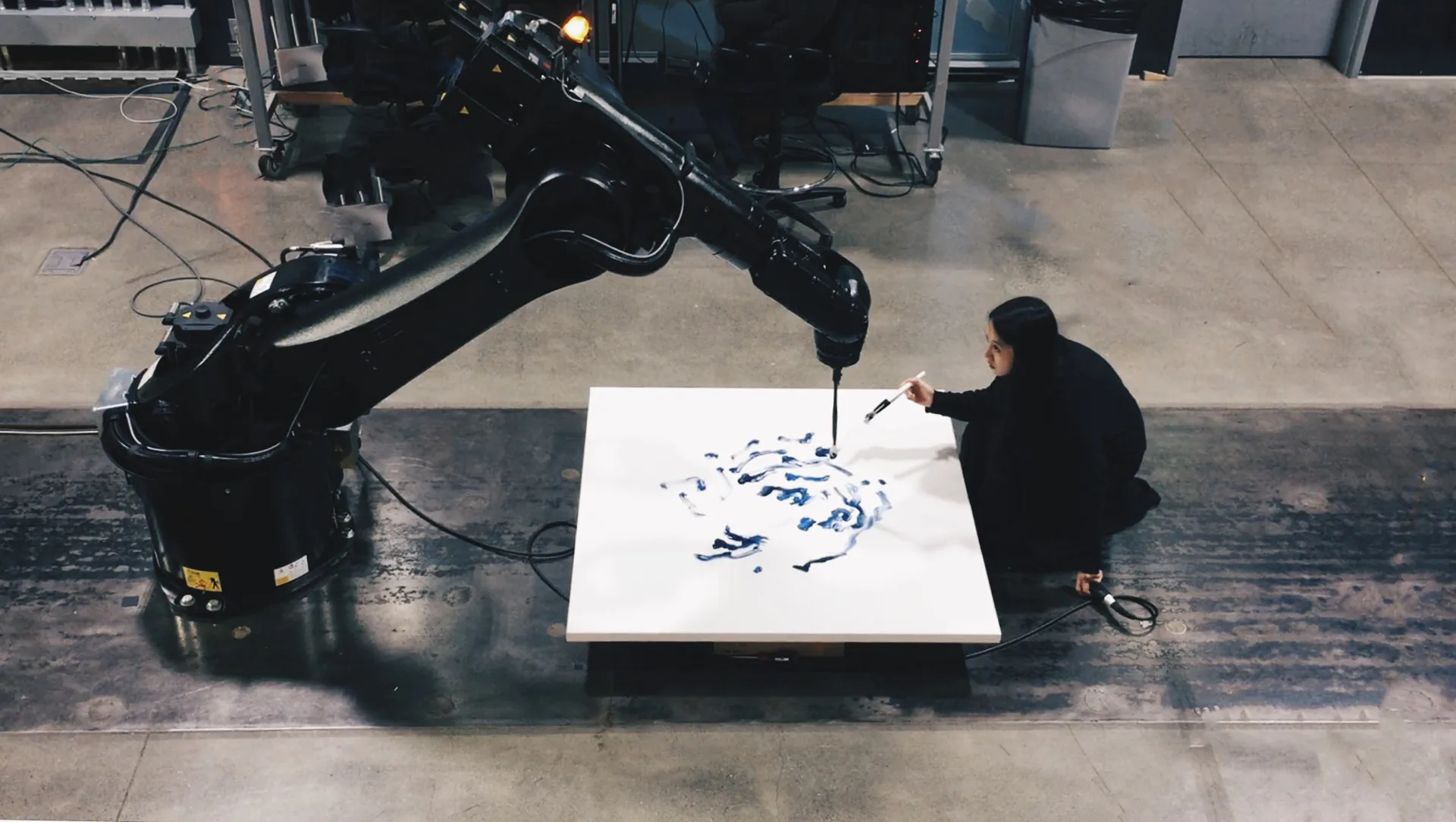
For Sougwen 愫君 Chung, a robotic drawing system is not a replacement for the artist. It is a collaborator: an instrument with its own timing, limitations and capacity for surprise. Since 2015, Chung’s Operational Art practice has explored what happens when hand-made marks meet machine-generated gestures.
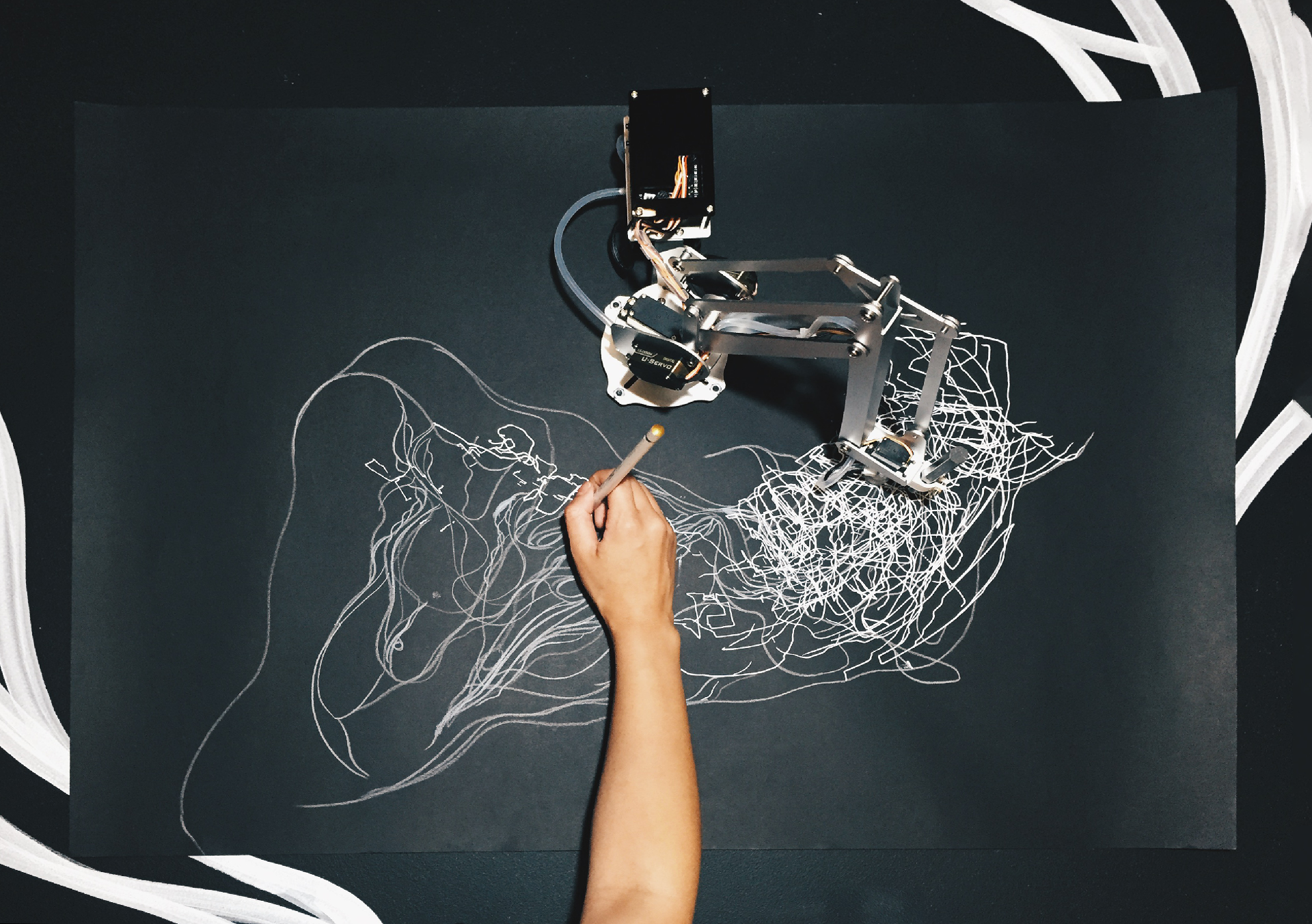
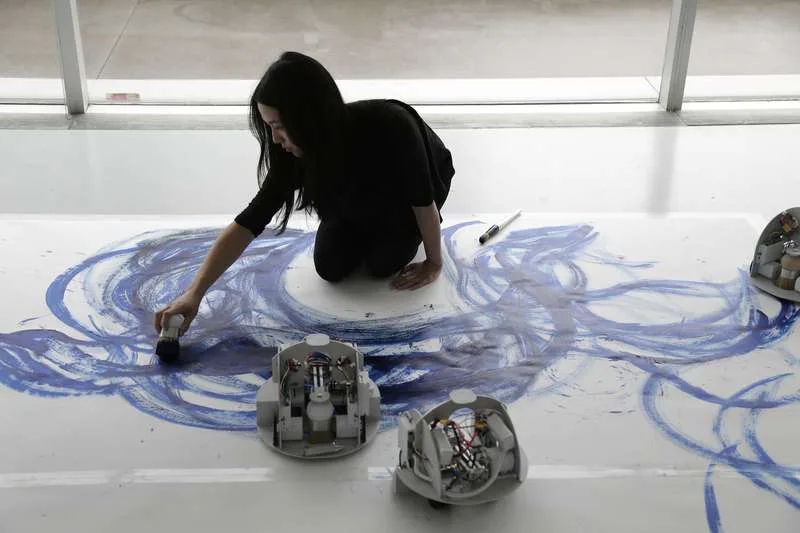
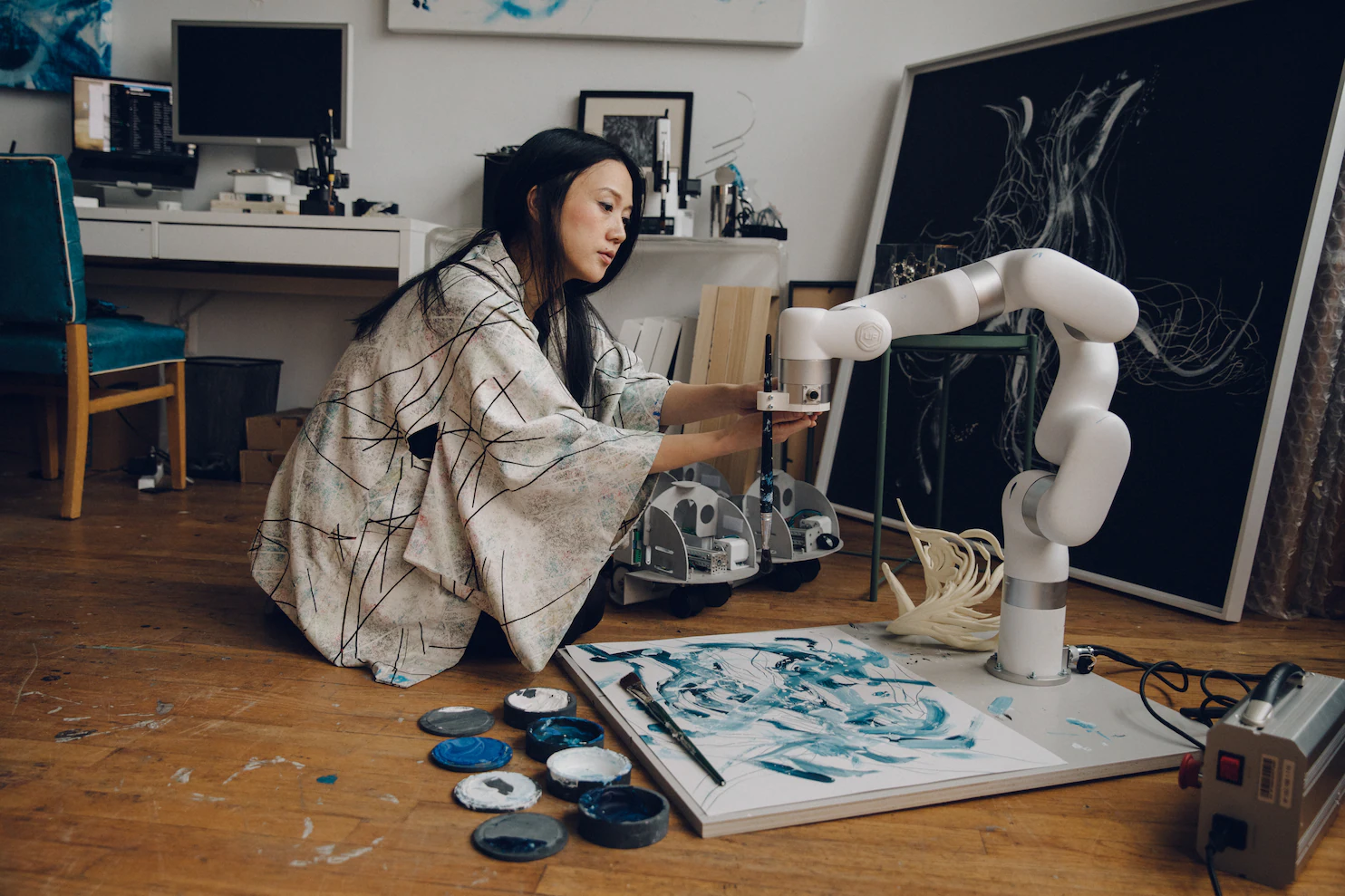
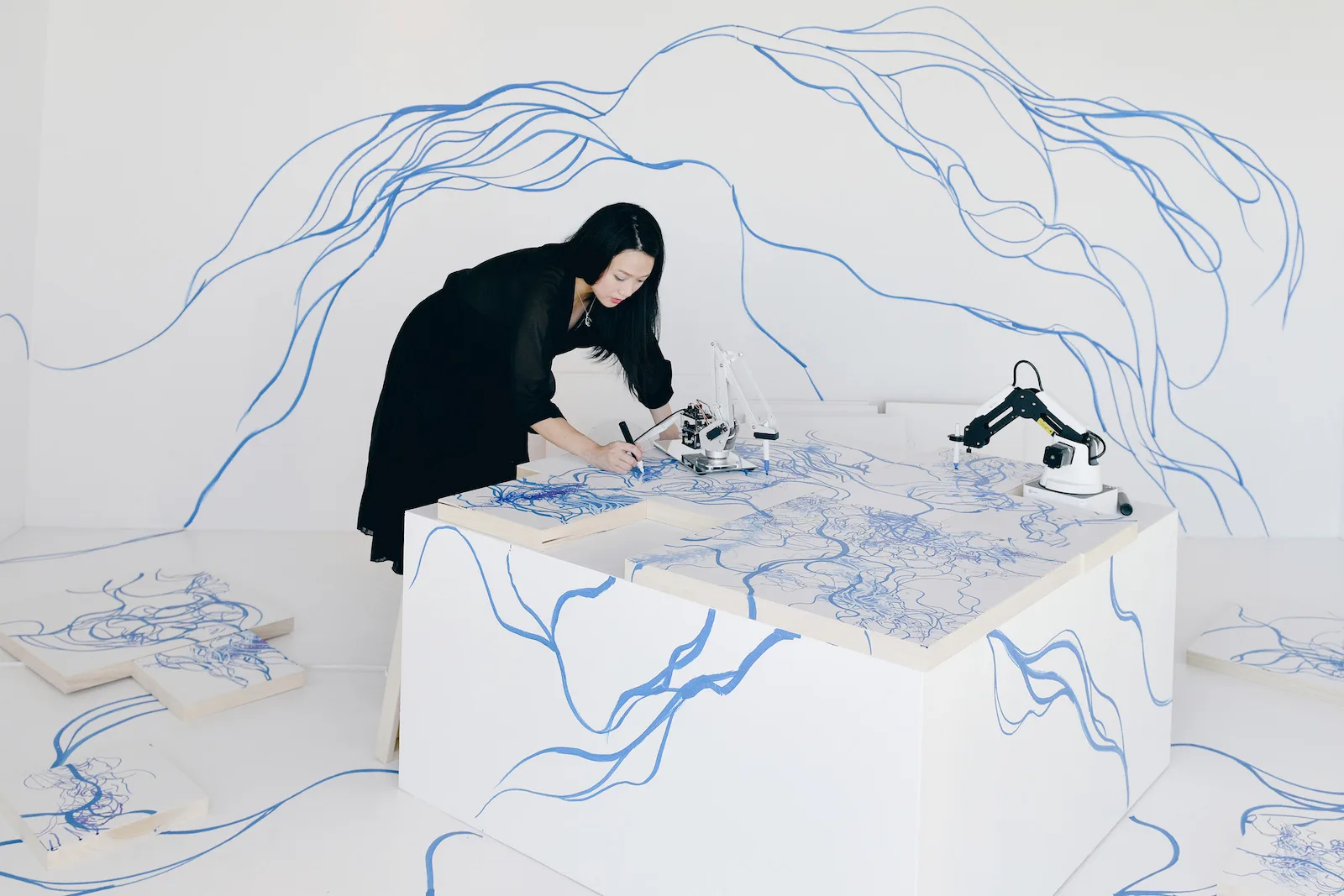
The central project is the Drawing Operations Unit, or D.O.U.G. Early versions used computer vision to observe Chung’s movements and respond in real time. Later systems were trained on years of the artist’s archived drawings, allowing the machines to produce interpretations rather than simple copies. The distinction matters. Chung’s robots do not merely automate a pre-existing image; they participate in an unfolding performance, drawing alongside the artist as the work develops.
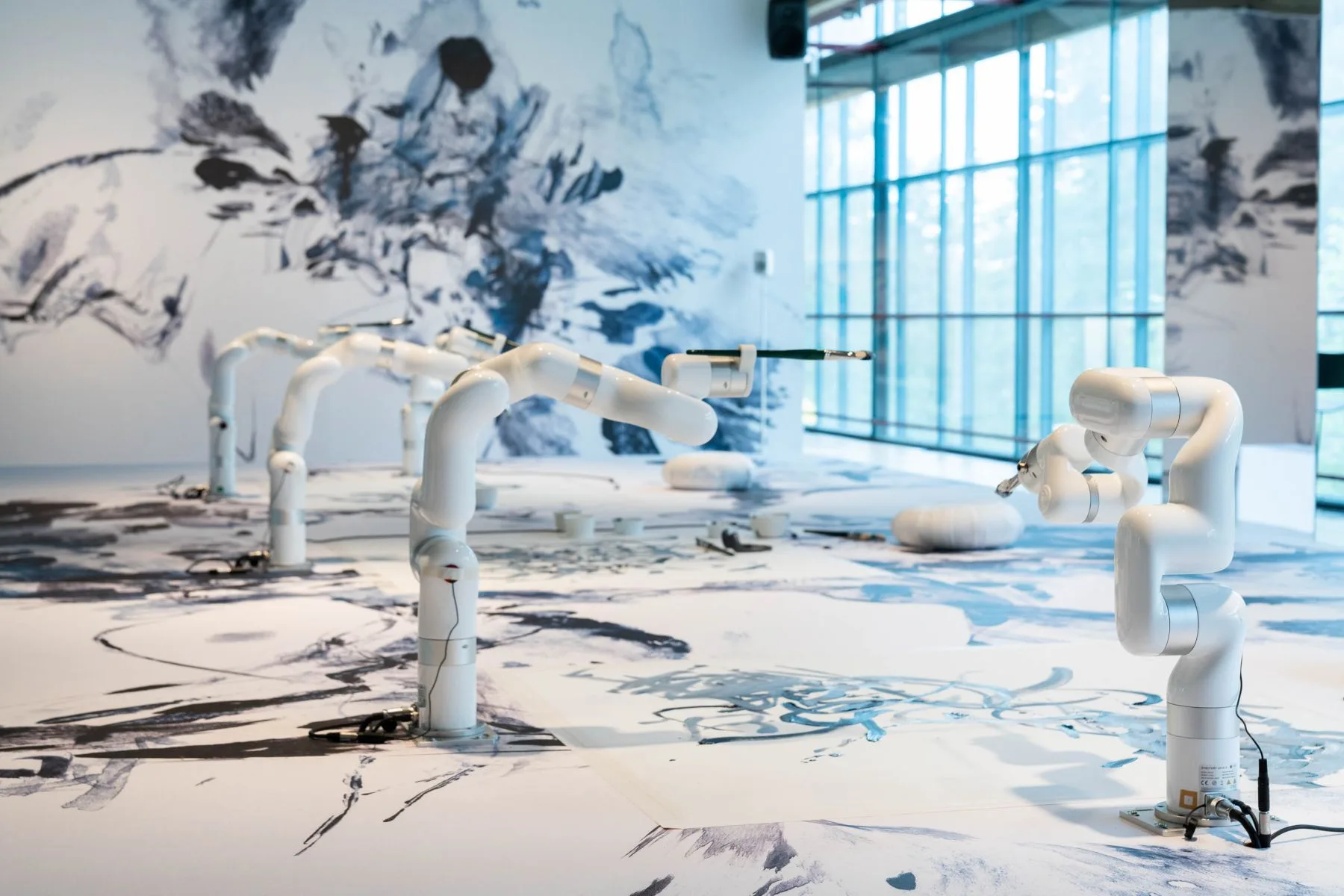
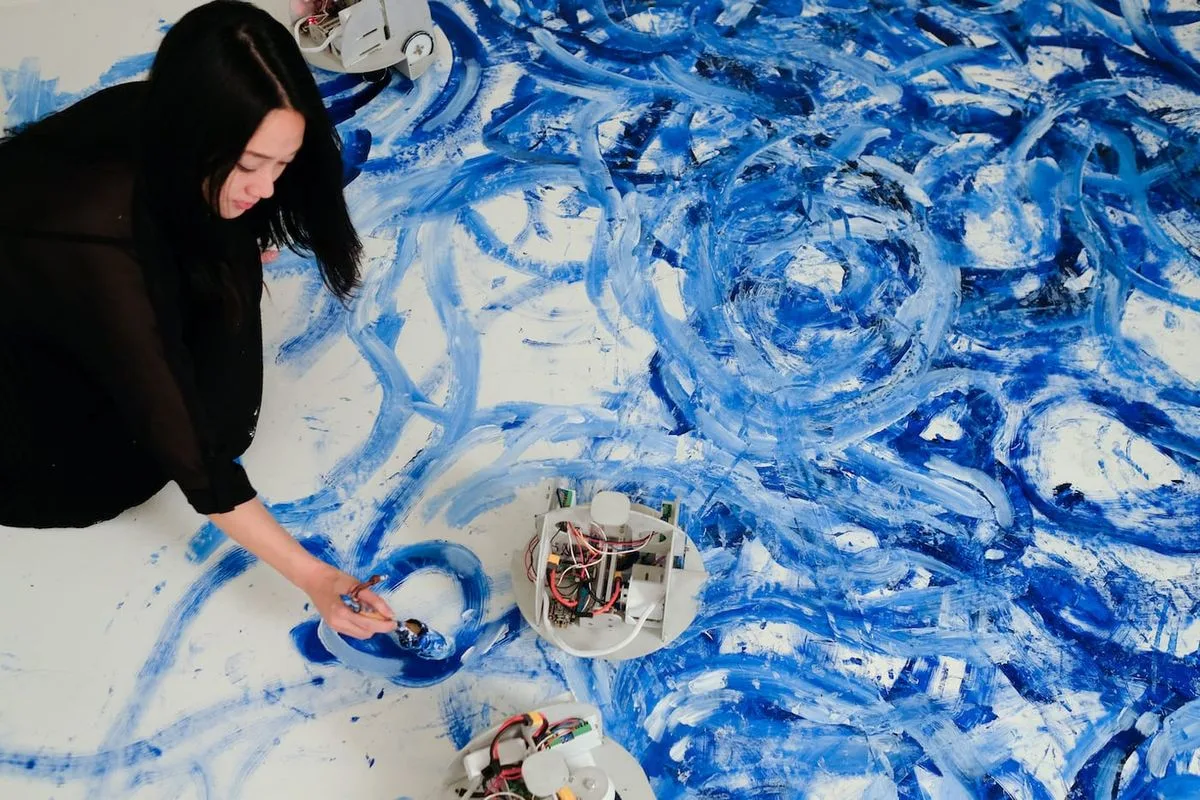
This makes the studio resemble a laboratory, rehearsal space and dance floor at once. Robotic arms, custom software, sensors and paint become part of a choreography in which authorship is distributed. A line may begin as a physical impulse from Chung, be translated through data, and return as a mechanical gesture with unexpected weight or direction. Error is not necessarily failure. It becomes evidence of negotiation.
Chung’s work also resists the familiar promise that artificial intelligence will make creativity faster and more efficient. The drawings are slow, embodied and materially specific. They foreground pressure, rhythm, hesitation and the irreversible nature of a mark. In this sense, the robot is less like an image generator than a kinetic partner—one that makes the conditions of creative decision visible.
MIT’s Docubase entry on Drawing Operations describes the series as an inquiry into authorship, agency, learning and sensing. That inquiry continues in newer works incorporating neural networks, biofeedback and multiple robotic systems. Chung’s achievement is not simply teaching machines to draw. It is using drawing to ask how humans and machines might learn to make meaning together.
Last modified: July 26, 2026
Related Posts
Meshtastic: Open-Source Off-Grid LoRa Mesh Networking
Meshtastic is an open-source communication system that turns inexpensive LoRa
AlphaGenome: AI Mapping the Regulatory Genome
Most of the human genome does not encode proteins. Yet
Understanding Media: The Extensions of Man — Marshall McLuhan
Marshall McLuhan’s Understanding Media: The Extensions of Man was first
Akira — Katsuhiro Otomo
Akira is Katsuhiro Otomo’s monumental manga about power, adolescence and
Simulacra and simulation – Jean Baudrillard
Jean Baudrillard’s seminal work, Simulacra and Simulation, published in 1981,
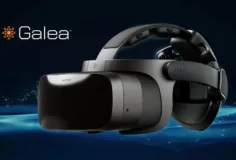
OpenBCI’s Galea: Brain-Computer Interface for Neuroscience and VR
OpenBCI’s Galea represents a significant advancement in brain-computer interfaces (BCIs).