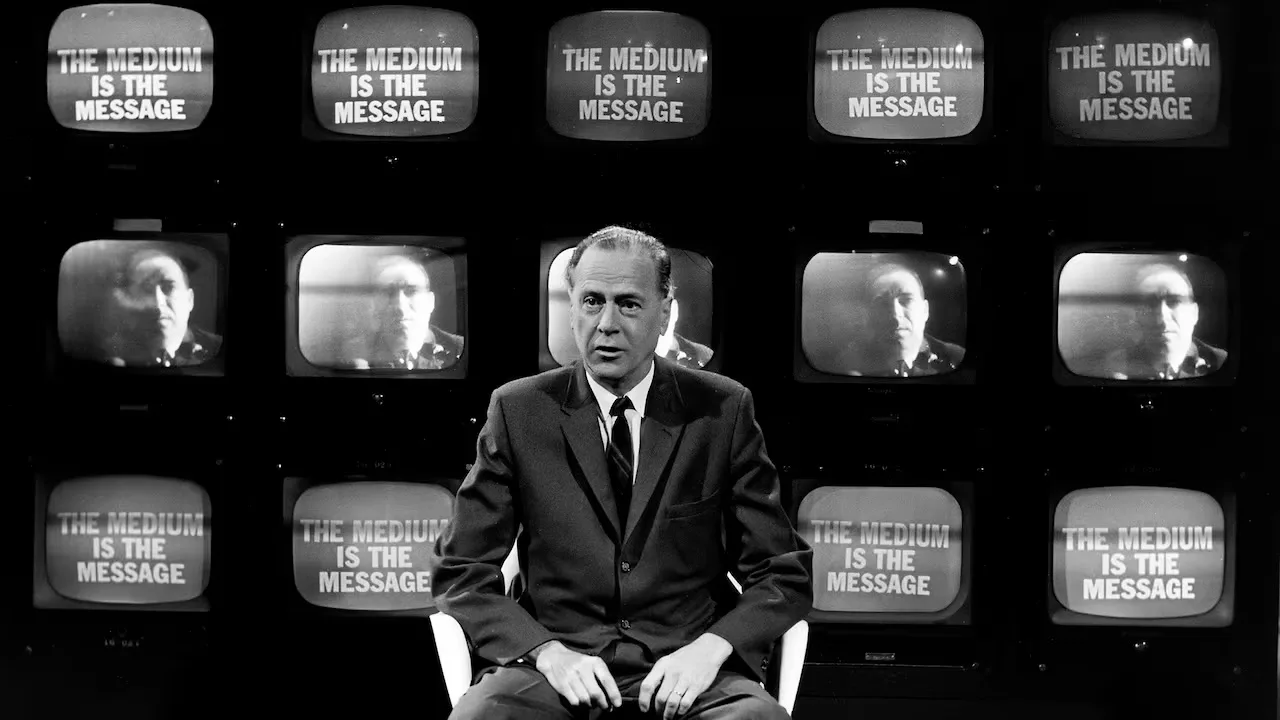
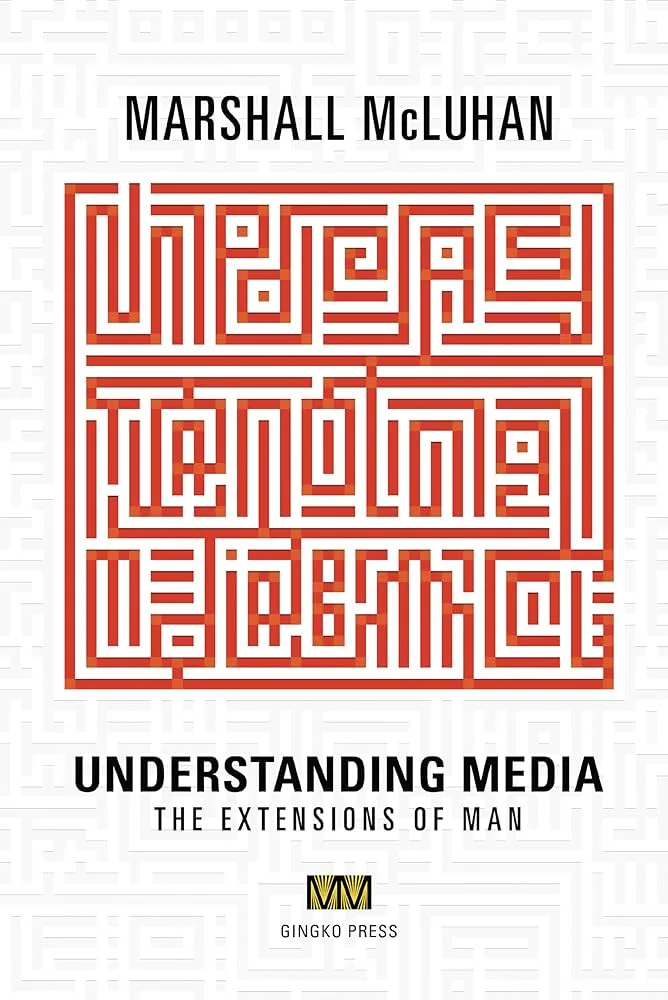
Marshall McLuhan’s Understanding Media: The Extensions of Man was first published in 1964, when television, radio and mass-circulation print were reshaping everyday life. Its central question remains strikingly current: what happens to human perception and social organisation when a new medium becomes part of the environment?
McLuhan’s most famous formulation, “the medium is the message”, is often treated as a slogan about technology. It is better understood as a method. Rather than concentrating only on the content delivered through a medium, McLuhan asks us to examine the medium’s structure: its speed, scale, rhythm and demands on attention. A railway, telephone or social platform changes patterns of movement and association regardless of the individual messages it carries.
The subtitle, The Extensions of Man, describes McLuhan’s wider approach. Technologies extend bodies and senses: the wheel extends the foot, the camera extends the eye, and electronic networks extend communication across distance. These extensions also reorganise the person using them. Convenience can bring new forms of dependence, while increased connection can produce overload, distraction or social pressure.
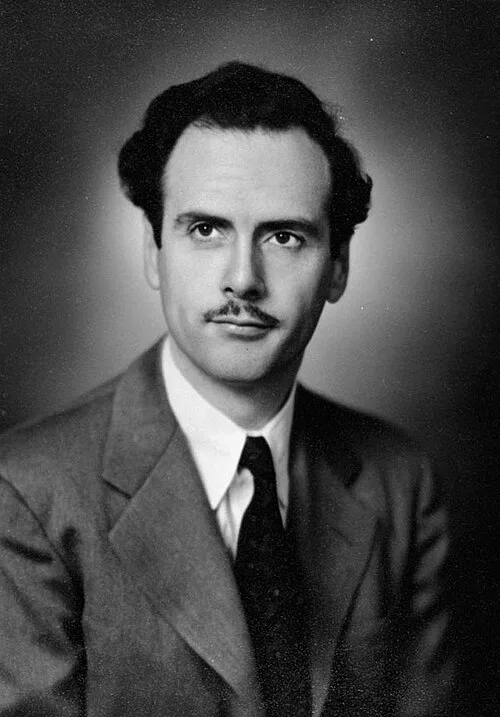
McLuhan also distinguishes between “hot” and “cool” media. The distinction is not a simple ranking of good and bad technologies. It concerns how much information a medium supplies and how much participation it demands from its audience. His categories are historically specific and debatable, but they encourage a useful question: are we receiving a finished experience, or completing it through interpretation and interaction?
Read today, Understanding Media is less a prediction manual than a tool for noticing technological environments. Its language can be playful and occasionally overconfident, yet its habit of looking beyond content remains valuable. For anyone trying to understand platforms, notifications, immersive interfaces or generative systems, McLuhan’s book offers a durable reminder: technology does not merely carry culture; it helps shape the conditions in which culture is made.
Sources: MIT Press edition of Understanding Media; The Estate of Marshall McLuhan on his key concepts; MIT-hosted extract from the book.
Last modified: July 26, 2026
Related Posts

Meshtastic: Open-Source Off-Grid LoRa Mesh Networking
Meshtastic is an open-source communication system that turns inexpensive LoRa

AlphaGenome: AI Mapping the Regulatory Genome
Most of the human genome does not encode proteins. Yet

Sougwen Chung: Drawing with Robotic Systems
For Sougwen 愫君 Chung, a robotic drawing system is not
Akira — Katsuhiro Otomo
Akira is Katsuhiro Otomo’s monumental manga about power, adolescence and

Simulacra and simulation – Jean Baudrillard
Jean Baudrillard’s seminal work, Simulacra and Simulation, published in 1981,
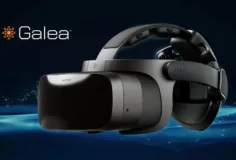
OpenBCI’s Galea: Brain-Computer Interface for Neuroscience and VR
OpenBCI’s Galea represents a significant advancement in brain-computer interfaces (BCIs).