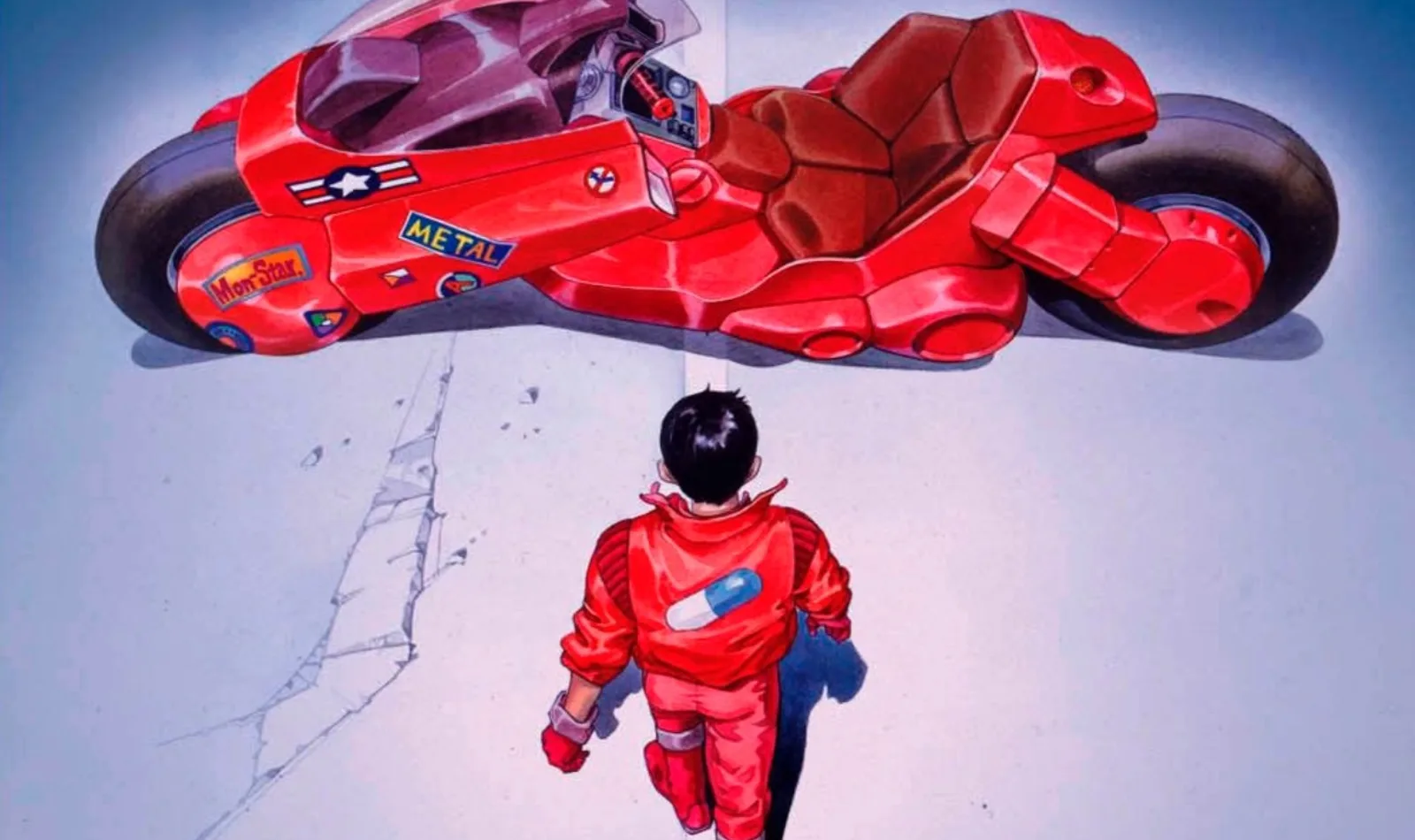
Akira is Katsuhiro Otomo’s monumental manga about power, adolescence and technological catastrophe. First published by Kodansha in 1982, it imagines Neo-Tokyo as a city rebuilt after a thermonuclear attack, where motorcycle gangs occupy the streets while state scientists experiment with forces they barely understand. The complete English edition is published in six volumes. Kodansha’s series page provides the current edition and publication details.
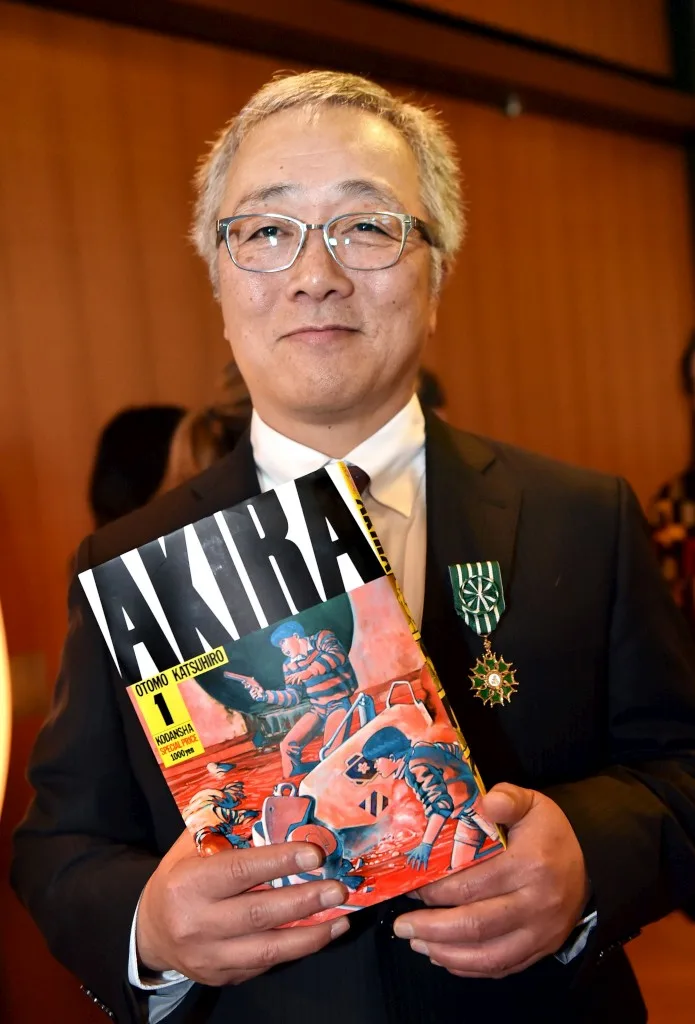
At its centre are Kaneda and Tetsuo, two teenage friends pulled into a conflict involving military secrecy, psychic abilities and the buried consequences of urban destruction. Otomo’s achievement is not simply to make the future look convincing. He gives Neo-Tokyo a physical and political life: elevated motorways, damaged neighbourhoods, overcrowded institutions and monumental construction projects all express a society trying to restore order without confronting the violence that created it.
The manga’s scale also distinguishes it from its famous animated adaptation. Otomo directed the 1988 film, which compresses and reshapes the story into a concentrated vision of paranoia, mutation and collapse. The British Film Institute records the film as a 1987 Japanese production, while its cinema release is generally dated to 1988.
Akira remains central to cyberpunk because it treats advanced technology neither as salvation nor mere decoration. Scientific progress, militarised infrastructure and youthful alienation are entangled. Its influence can be seen in later anime, science-fiction cinema and the visual language of speculative cities. More than four decades after its debut, Otomo’s Neo-Tokyo still feels less like a prediction than a warning about what modernity leaves unresolved.
Last modified: July 26, 2026
Related Posts
Meshtastic: Open-Source Off-Grid LoRa Mesh Networking
Meshtastic is an open-source communication system that turns inexpensive LoRa
Understanding Media: The Extensions of Man — Marshall McLuhan
Marshall McLuhan’s Understanding Media: The Extensions of Man was first
Sougwen Chung: Drawing with Robotic Systems
For Sougwen 愫君 Chung, a robotic drawing system is not
Simulacra and simulation – Jean Baudrillard
Jean Baudrillard’s seminal work, Simulacra and Simulation, published in 1981,


Altered Carbon – Richard K. Morgan
Richard K. Morgan’s Altered Carbon isn’t just another cyberpunk novel;