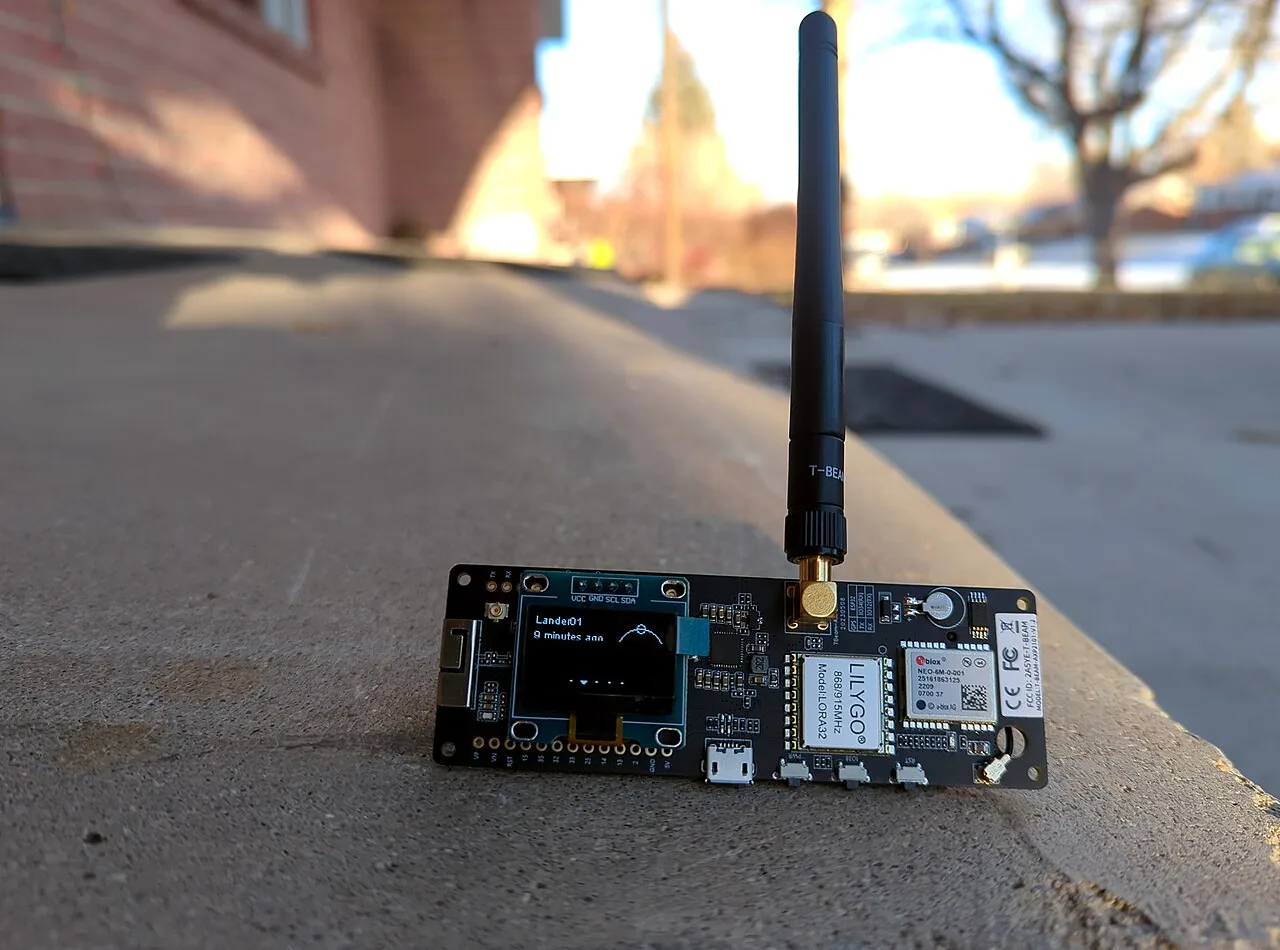
Meshtastic is an open-source communication system that turns inexpensive LoRa radios into a decentralised, off-grid mesh network. It is designed for situations where mobile coverage, Wi-Fi or internet access is unavailable—or where relying on that infrastructure is undesirable.
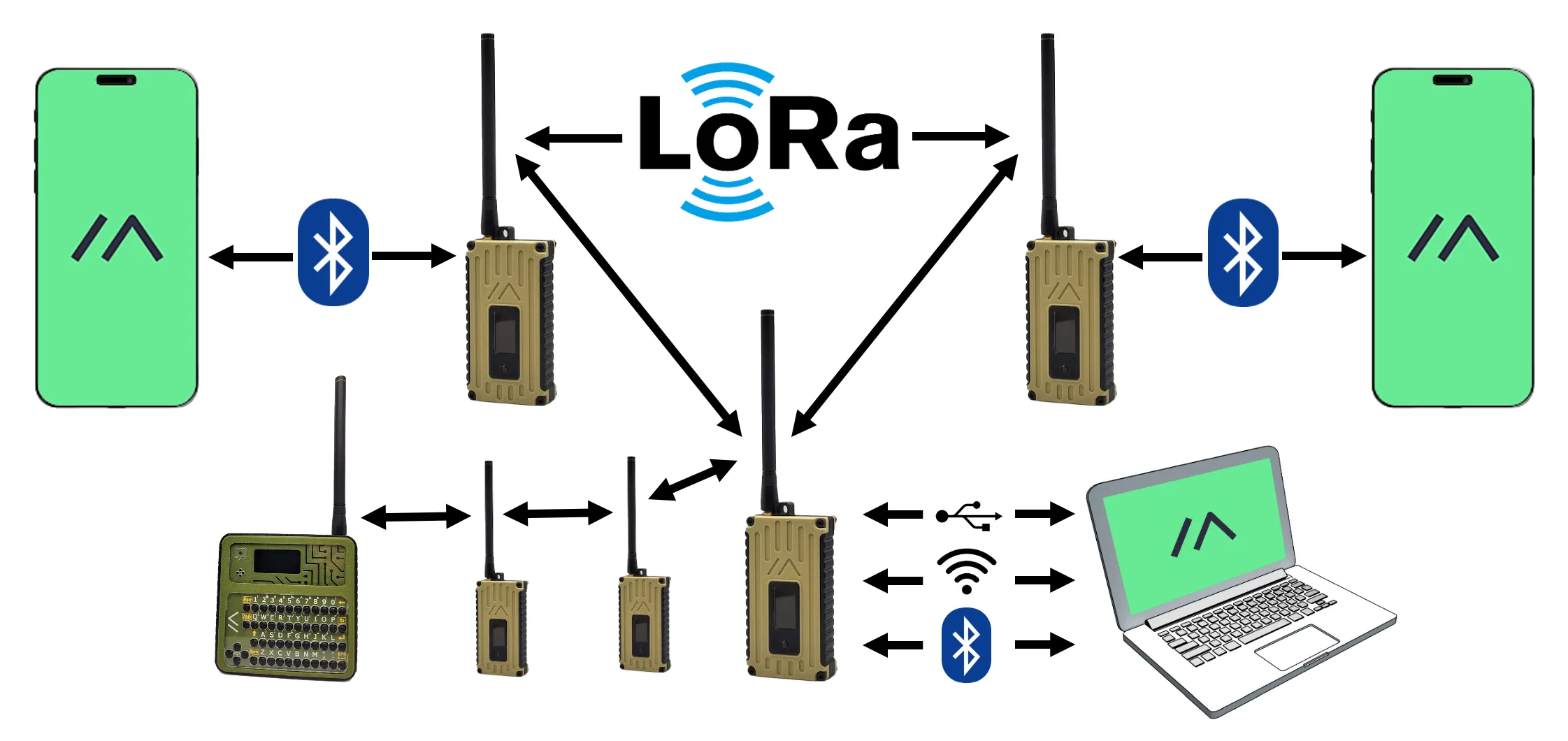
Each node can send text messages, share location data and relay packets for other devices. A message does not need to travel directly from sender to recipient: nearby radios can forward it across the mesh, extending practical coverage as more nodes are added. Phones are useful for configuration and messaging through Bluetooth, but a phone is not required for the radio network itself. The project describes the system as suitable for hiking, emergency preparedness and remote operations. (github.com)
LoRa provides the long range and low power consumption, while Meshtastic supplies the open firmware, networking protocol and client software. Official tools include Android, Apple, web and Python interfaces, giving the project a broader ecosystem than a single-purpose radio gadget. The firmware supports several hardware families, including ESP32, nRF52, RP2040/RP2350 and Linux-based devices. (meshtastic.org)
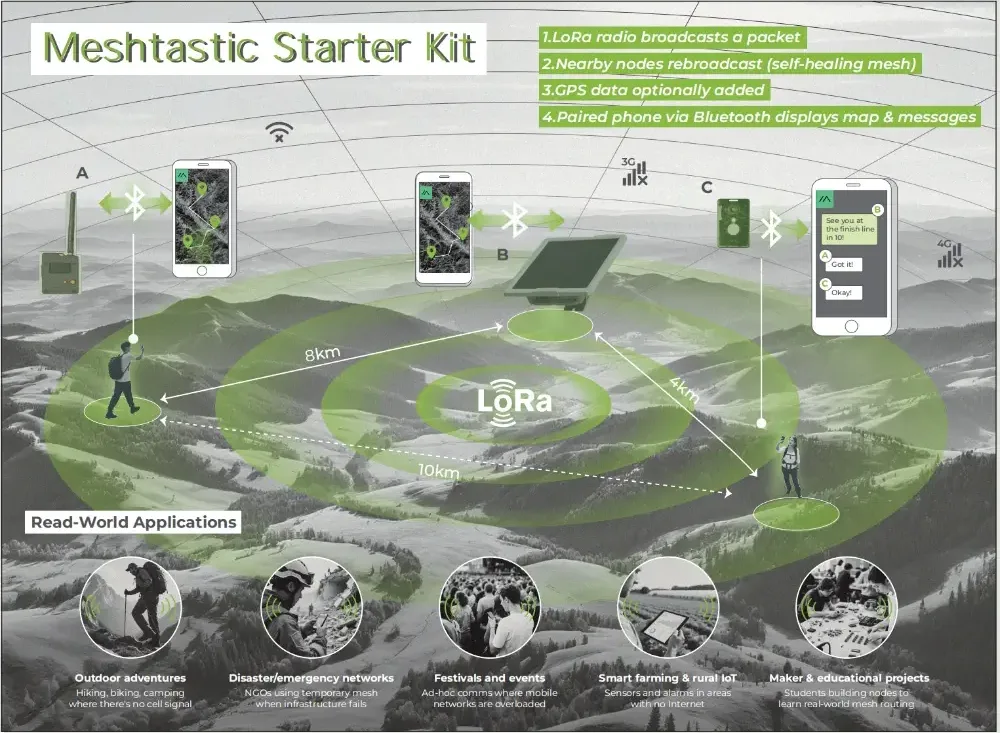
Privacy is part of the appeal, although “off-grid” does not mean automatically anonymous or invulnerable. Meshtastic advertises AES-256 encryption for messages, but users still need to manage channel keys, device security and radio settings carefully. Range also depends on terrain, antennas, frequency regulations, data rate and node placement; LoRa is optimised for small, infrequent packets rather than fast internet access.
That combination makes Meshtastic an intriguing piece of practical cyberpunk infrastructure: modest hardware, open software and a communications layer that can exist beneath—or beyond—the conventional network. New users can begin with the official Meshtastic site, then consult the firmware repository and Python API documentation before choosing compatible hardware.
Last modified: July 26, 2026
Related Posts
AlphaGenome: AI Mapping the Regulatory Genome
Most of the human genome does not encode proteins. Yet

Understanding Media: The Extensions of Man — Marshall McLuhan
Marshall McLuhan’s Understanding Media: The Extensions of Man was first

Sougwen Chung: Drawing with Robotic Systems
For Sougwen 愫君 Chung, a robotic drawing system is not

Akira — Katsuhiro Otomo
Akira is Katsuhiro Otomo’s monumental manga about power, adolescence and
OpenBCI’s Galea: Brain-Computer Interface for Neuroscience and VR
OpenBCI’s Galea represents a significant advancement in brain-computer interfaces (BCIs).

Altered Carbon – Richard K. Morgan
Richard K. Morgan’s Altered Carbon isn’t just another cyberpunk novel;